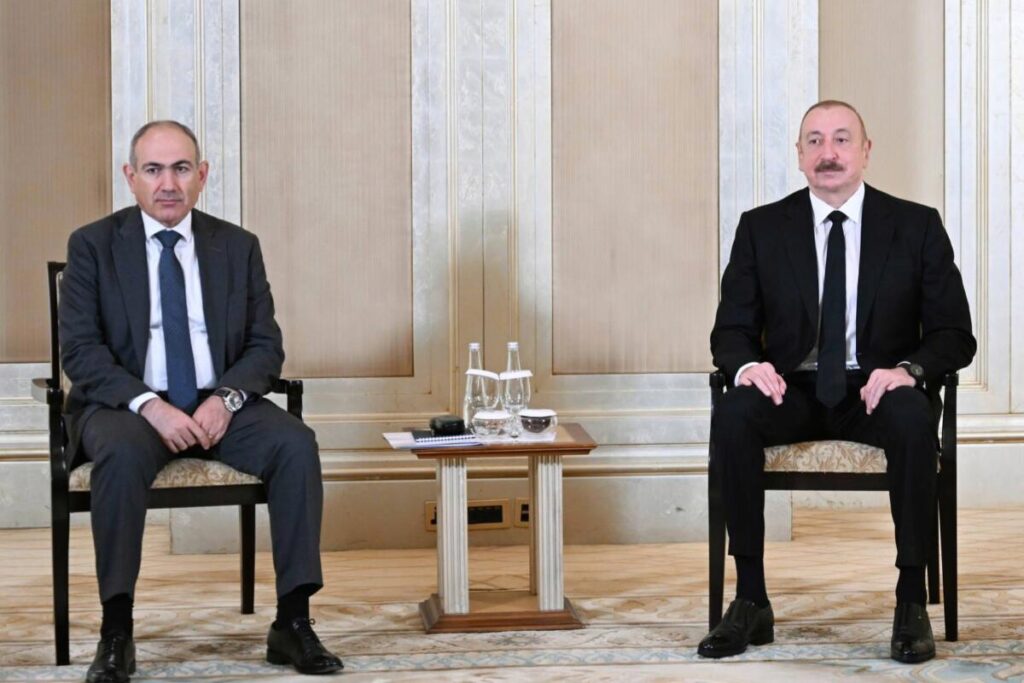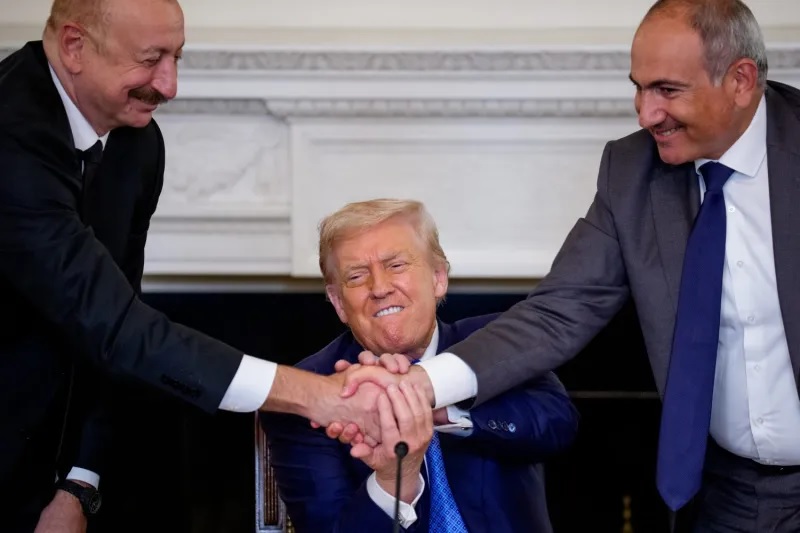
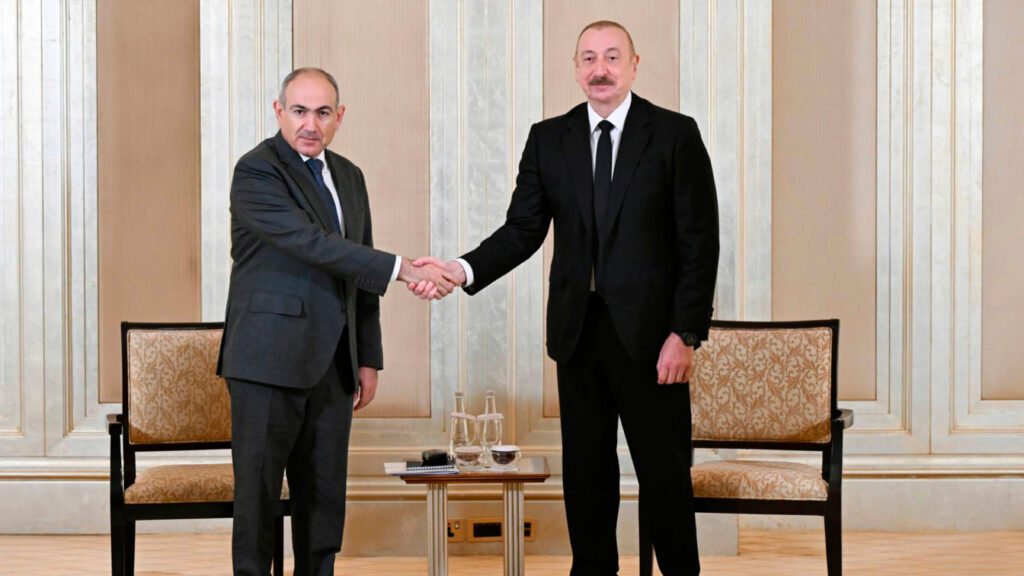
Washington, D.C. — 8–11 August 2025. Armenian Prime Minister Nikol Pashinyan and Azerbaijani President Ilham Aliyev, in a ceremony witnessed by U.S. President Donald J. Trump, initialled and published the text of a wide-ranging, U.S.-brokered agreement intended to formally end decades of hostilities between Yerevan and Baku. The leaders also signed a joint declaration on 8 August; the full initialed agreement text was released by both sides on 11 August.
What the agreement says — main points
- Mutual renunciation of territorial claims: Both sides undertake to relinquish claims to each other’s territory and to respect each other’s internationally recognized borders.
- No use of force / respect for international law: The text includes explicit pledges to refrain from the use of force and to settle disputes by peaceful, legal means.
- Diplomatic relations and normalization: The agreement foresees the establishment (or upgrading) of diplomatic relations and steps toward normalizing ties, including reopening transport and communications links.
- A strategic transit corridor: A central — and contested — element is the creation of a transit route linking mainland Azerbaijan to its exclave of Nakhchivan across southern Armenia. The published text and subsequent reporting indicate the United States will have a leading role in developing and securing that corridor (portrayed in political coverage as a U.S.-backed transit corridor).
The Armenian prime minister’s office and the Azerbaijani presidency published the joint declaration text and accompanying statements after the Washington meeting.
Why this matters — regional and geopolitical implications
Analysts say the deal — if implemented — could reset the South Caucasus: it would open blocked transport routes, shift economic flows, and reduce the risk of renewed large-scale fighting after decades of frozen conflict and flare-ups. Western engagement through U.S. mediation, and the prospect of a functioning international transit corridor, would increase non-Russian influence in the region. At the same time, Moscow and Tehran are cautious; Yerevan’s government has publicly sought to reassure both that the agreement is not directed against them.
Reactions — domestic and international
- Azerbaijan welcomed the deal as vindication of its post-2020 territorial gains and as a step toward regional integration. President Aliyev framed it as reflecting Baku’s balanced interests.
- Armenia’s leadership described the agreement as a “balanced foundation” for lasting peace, but the accord has produced mixed reactions at home: some political groups and sections of the public raised concerns about sovereignty, security guarantees for ethnic Armenians who lived in Nagorno-Karabakh, and the details of the corridor. Videos and on-the-ground reporting show public debate and protests in Yerevan.
- European Union and many Western capitals publicly welcomed the initialing of the agreement and urged timely implementation and parliamentary ratification by both sides.
- Russia and Iran both reacted cautiously; regional commentary and diplomatic exchanges indicate both powers sought assurances that the agreement would not be used to exclude their economic or security interests. Analysts warn that antagonism from any of these actors or domestic political backlash in Armenia could imperil implementation.
Obstacles and risks to implementation
Experts and policy commentators point to several major risks that could derail the accord:
- Domestic politics in Armenia — the agreement requires parliamentary ratification and, in some readings, constitutional adjustments. Analysts warn that internal political divisions could stall or reverse the process.
- Guarantees for displaced and minority populations — the humanitarian and legal status of ethnic Armenians who left Nagorno-Karabakh after Azerbaijan’s 2023 reassertion of control remains a sensitive, unresolved issue. Failure to secure durable protections could fuel unrest.
- Transit corridor security and sovereignty concerns — the corridor’s management, security arrangements, and legal status — especially given the suggested U.S. developmental role — are politically explosive in the region and may provoke opposition from Russia and Iran or domestic nationalist groups.